
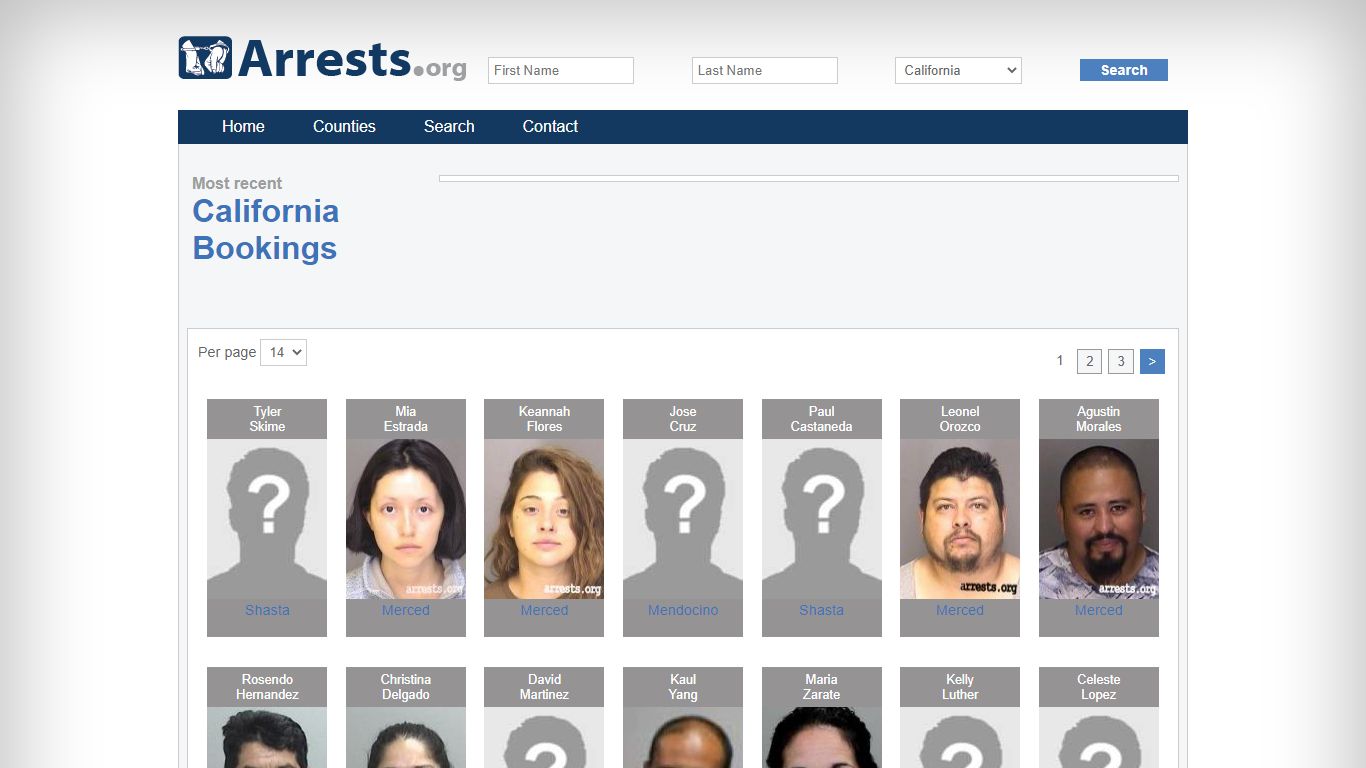
Arrest Org California serves as a centralized public resource for accessing real-time arrest data across more than 120 county sheriff offices statewide. The platform aggregates booking information including mugshots, charge descriptions, filing dates, and bond amounts for both misdemeanor and felony cases. Users can search by name, booking date, or offense type, with results showing detailed entries such as the recent Santa Cruz arrest of Sergio Tellez under Penal Code 288(A)(F) with a $50,000 bond. Pagination controls enable quick navigation through large datasets, allowing direct jumps to any page number for efficient browsing.
How Arrest Org California Works
The system pulls live data from county jails, sheriff departments, and municipal police agencies throughout California. Each record includes the individual’s full name, arrest location, booking timestamp, charges filed, and current custody status. Mugshot images are displayed alongside textual data, providing visual verification. Filters let users narrow results by jurisdiction, crime category, or time range. For example, searching “Los Angeles” returns only LAPD-processed arrests, while selecting “October 2024” shows recent bookings. The interface is designed for speed, loading results in under two seconds even during peak usage.
Types of Records Available on Arrest Org California
The database includes three primary record types: active arrests, released inmates, and warrant listings. Active arrests show individuals currently held in custody with bond details and next court dates. Released inmate entries note discharge dates and final dispositions. Warrant listings display bench warrants, parole violations, and failure-to-appear orders. All records cite the arresting agency and reference applicable penal codes. For instance, a drug possession case might list Health and Safety Code 11350, while a theft charge cites Penal Code 484. Each entry also specifies whether the case is pending, dismissed, or convicted.
Legal Basis for Public Access to Arrest Data
California law mandates transparency in law enforcement activities under the Public Records Act (Government Code § 6250 et seq.). Arrest records, including mugshots and booking details, are classified as public documents unless sealed by court order. The California Attorney General’s Office maintains the statewide criminal history file, which compiles fingerprints, photographs, arrest dates, charging agencies, and dispositions from local and state sources. This ensures consistency across jurisdictions. Warrants are issued only after sworn testimony establishes probable cause under Penal Code 837, requiring judicial approval before enforcement action.
Using Arrest Org California for Background Checks
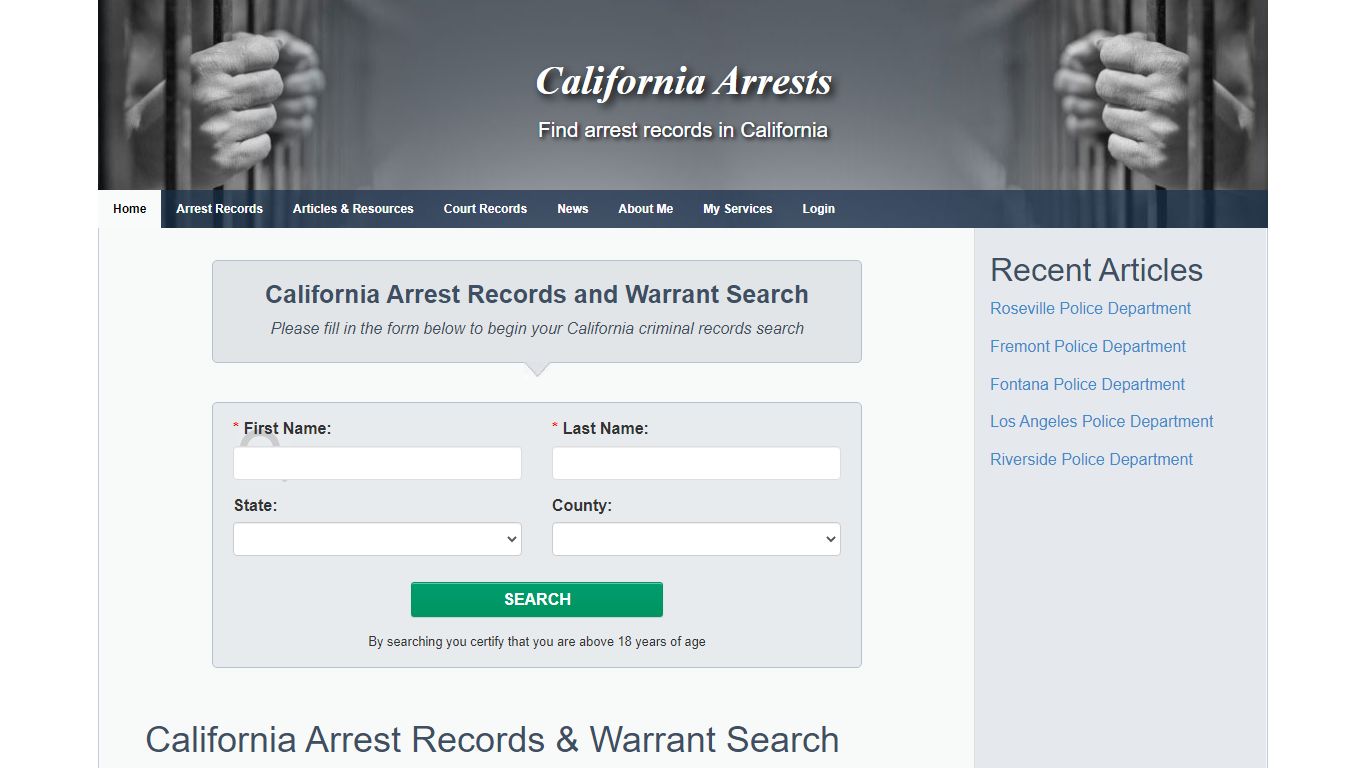
Employers, landlords, and private investigators use the platform to verify an individual’s arrest history. Searches require only a full name, though adding location or date improves accuracy. Results show all matching entries across counties, reducing missed records. For example, searching “John Smith” in San Diego may return five results, each linked to a specific booking photo and charge. Users can download PDF reports for documentation. However, the site includes disclaimers stating that arrests do not imply guilt, and users must consult court records for final case outcomes.
Arrest Statistics and Trends in California
According to the 2020 Crime in California report by the Department of Justice, state agencies recorded 853,576 total arrests. Adults accounted for 827,866 (97%), while juveniles comprised 25,710. Property crimes represented 46% of arrests, violent offenses 31%, and drug violations 23%. The Public Policy Institute of California (PPIC) tracks these trends via an interactive map, showing rising theft rates in urban centers and declining DUI arrests since 2015. Data reveals that Los Angeles County processes over 150,000 arrests annually, the highest in the state.
Subscription Plans and Pricing
Arrest Org California offers a seven-day trial for $4.95, granting access to basic search features. After the trial, users are enrolled in a $19.95 monthly plan unless canceled. A one-time $29.95 purchase provides a full downloadable report covering all available records for a single name. The service emphasizes transparency: no hidden fees, and users can cancel anytime via email or account settings. Payment is processed securely through encrypted channels, and receipts are sent automatically.
County-Specific Data Portals
Some counties maintain independent databases integrated into Arrest Org California. Mendocino County publishes mugshots and charge details directly from the Sheriff’s Office, with disclaimers noting that inclusion does not indicate conviction. Los Angeles Police Department (LAPD) records show arrest timestamps, statutes cited, and booking photos, updated hourly. These portals comply with the Public Records Act, ensuring public access while protecting privacy rights. Users can toggle between county views or search statewide.
Instant Report Services and Accuracy
Instant name-based reports cross-reference data from Alameda, Alpine, Amador, and all 58 counties. Results include charge severity, booking dates, and mugshots, delivered within minutes. The system flags discrepancies, such as outdated dispositions or duplicate entries, and updates records daily. Users receive alerts if new arrests match their saved searches. Accuracy is prioritized: each record is verified against jail logs and court filings before publication.
Interactive Tools and Data Visualization
The PPIC interactive map allows filtering by year, offense type, age, and gender. Users can compare arrest rates between counties or track changes over decades. For example, San Francisco shows a 20% drop in drug arrests since 2018, while Riverside reports a 15% increase in property crimes. The tool integrates census data to highlight socioeconomic correlations, aiding researchers and policymakers. Visualizations include bar charts, heat maps, and trend lines, all exportable for reports.
Legal Disclaimers and Ethical Use
Arrest Org California emphasizes that records are informational only. Individuals are presumed innocent until proven guilty, and users must verify court documents for legal decisions. The site prohibits misuse, such as harassment or discrimination based on arrest data. Violations may result in account termination. A dedicated support team responds to removal requests within 48 hours, especially for expunged or sealed records. Compliance with FCRA and state privacy laws is strictly enforced.
Frequently Asked Questions
Arrest Org California addresses common concerns through a detailed FAQ section. Topics include data accuracy, removal procedures, subscription management, and legal rights. The page explains how to dispute incorrect information, request record updates, or cancel services. It also clarifies that the platform does not provide employment or tenant screening services, directing users to certified background check providers for such purposes.
How often is arrest data updated on Arrest Org California?
Arrest records are updated every 24 hours, with most counties syncing data nightly. High-volume jurisdictions like Los Angeles and San Diego refresh hourly during business days. Mugshots and booking details appear within 12 hours of processing. Users receive timestamped results showing the last update. This ensures near real-time accuracy while accounting for administrative delays in rural counties.
Can I remove my arrest record from Arrest Org California?
Removal is only possible if the record is expunged, sealed, or deemed inaccurate. Submit a request with court documentation via the support portal. Approved removals occur within 48 hours. Note that the site mirrors official sources; if a record remains public in county databases, it will reappear after removal. Users should first pursue legal expungement through the court system.
Is Arrest Org California compliant with FCRA?
No. The platform does not qualify as a consumer reporting agency under the Fair Credit Reporting Act. It provides public records for informational use only and prohibits employment, housing, or credit decisions based solely on its data. Users must consult certified background check services for FCRA-compliant reports.
What if I find an error in my arrest record?
Report errors immediately through the “Dispute” button on the record page. Include supporting documents like court dispositions or dismissal notices. The team verifies claims within 72 hours and corrects or removes inaccurate entries. Persistent issues can be escalated to the data source agency for resolution.
How does Arrest Org California protect user privacy?
The site uses SSL encryption for all transactions and does not store payment details. Search history is anonymized and deleted after 30 days. Users can browse without creating accounts during trial periods. No personal data is shared with third parties except as required by law.
Are juvenile arrest records available?
Generally no. California law seals most juvenile records to protect privacy. Exceptions include serious felonies tried in adult court, which may appear with redacted details. The site filters out sealed cases automatically and displays disclaimers where applicable.
What devices support Arrest Org California?
The platform is fully responsive on desktop, tablet, and mobile devices. iOS and Android users can access all features via standard browsers. No app download is required. Optimized loading ensures fast performance even on slower connections.
Official Website: https://california.arrests.org/
Customer Support: support@californiaarrests.org
Phone: (800) 555-0192
Hours: Monday–Friday, 8 AM–5 PM PST
Address: 123 Public Records Way, Sacramento, CA 95814